 From The Brief ·
 Three different people just started writing the rules for how agents pay.

In the span of one week: a payments company reportedly bought the biggest AI model routing layer, Google handed its agent-payments protocol to a standards body, and the U.S. Treasury published the actual licensing rules for who gets to issue the money. None of these three moves referenced the others. All of them are about the same question — and if you sell to agents on x402 or MPP, all three land on you.
1. The company that bought the routing layer
Stripe’s reported $7B+ acquisition of OpenRouter — first reported by Bloomberg and Fortune on August 16 and not yet self-confirmed by either company — puts one firm in control of both model routing (400+ models, roughly $1B in annualized inference volume) and a settlement rail, MPP. Developer reaction has been cautious rather than celebratory, and the concern is specific: gateway neutrality, now that the same company owns the pipe and the meter. A router that also settles payments has opinions about which payments are easy to settle.
2. Google didn’t wait to see how that plays out
Back in May, Google donated its Agent Payments Protocol (AP2) to the FIDO Alliance for open, vendor-neutral governance — with Mastercard, Visa, PayPal, Coinbase, and some sixty other organizations joining the working groups — and shipped a v0.2 adding "Human Not Present" autonomous payment flows. Read on its own in May, that was a standards announcement. Read next to this week’s news, it looks like a hedge: nobody wants one company holding both the routing layer and the rulebook. The protocol landscape is now splitting three ways — x402’s registry-and-crawler model under the Linux Foundation, MPP pushed by Stripe directly into agent-framework SDKs, and AP2 under a standards body.
3. And this week, the permit process for the money itself
On August 18, Treasury published its GENIUS Act stablecoin rules in the Federal Register — the proposed licensing regime for who may issue, offer, and sell payment stablecoins in the United States, following earlier proposals from the OCC and FDIC this year. Two things to keep straight: it covers issuers, not facilitators, so this is not new rules for x402 or MPP sellers directly. But nearly every agent payment on both rails settles in a stablecoin — so the licensing status of the entity behind your settlement asset just became a live variable in your stack. Comments close October 19; the Act takes effect January 2027. This is the fight over agent money we wrote about when Open USD launched, moving from press releases into the Federal Register.
The number that moved
We snapshot the public MPPscan dashboard the way we crawl the x402 catalog — because announced numbers and measured numbers are different genres. In the 24 hours after the acquisition news broke, between our August 17 and August 18 snapshots:
transactions on the MPP rail — 238,000 → 255,900 between snapshots
settled volume — $86,800 → $96,780
unique paying agents — 42,900 → 47,700
registered servers — 360 → 357, the one metric that held flat
The honest caveats: the dashboard is self-reported by a self-service registry, and one day is a data point, not a trend. But usage growing double digits while server count holds flat is the shape you’d expect if existing services are getting more agent traffic — and it’s the first read on the rail since the news. We run our fleet dual-stack across both x402 and MPP precisely so we don’t have to guess which rulebook wins.
What we’d watch this week
Whichever settlement rail your service runs on, check whether your stablecoin’s issuer shows up in the comment docket on the Treasury rule. That’s the earliest signal for who ends up licensed, who ends up restructuring — and whose rail gets complicated. The changes that affect your revenue in this ecosystem usually ship silently; this one, for once, comes with a comment period.
The ForgeMesh Brief
Brief subscribers read this analysis on August 18 — the day the Treasury rule hit the Federal Register. The Brief only sends when something in the agent-payments ecosystem actually moves. Next time it does, be first.
Subscribe to The BriefSelling to agents?
Check whether stock agent clients can actually pay your endpoint with the free scan, or ship the settlement-proven dual-rail middleware we run in production.
Related reading: the x402 Foundation launching under Linux Foundation governance and how Open USD blindsided Circle.
- news
- regulation
- stripe
- mpp
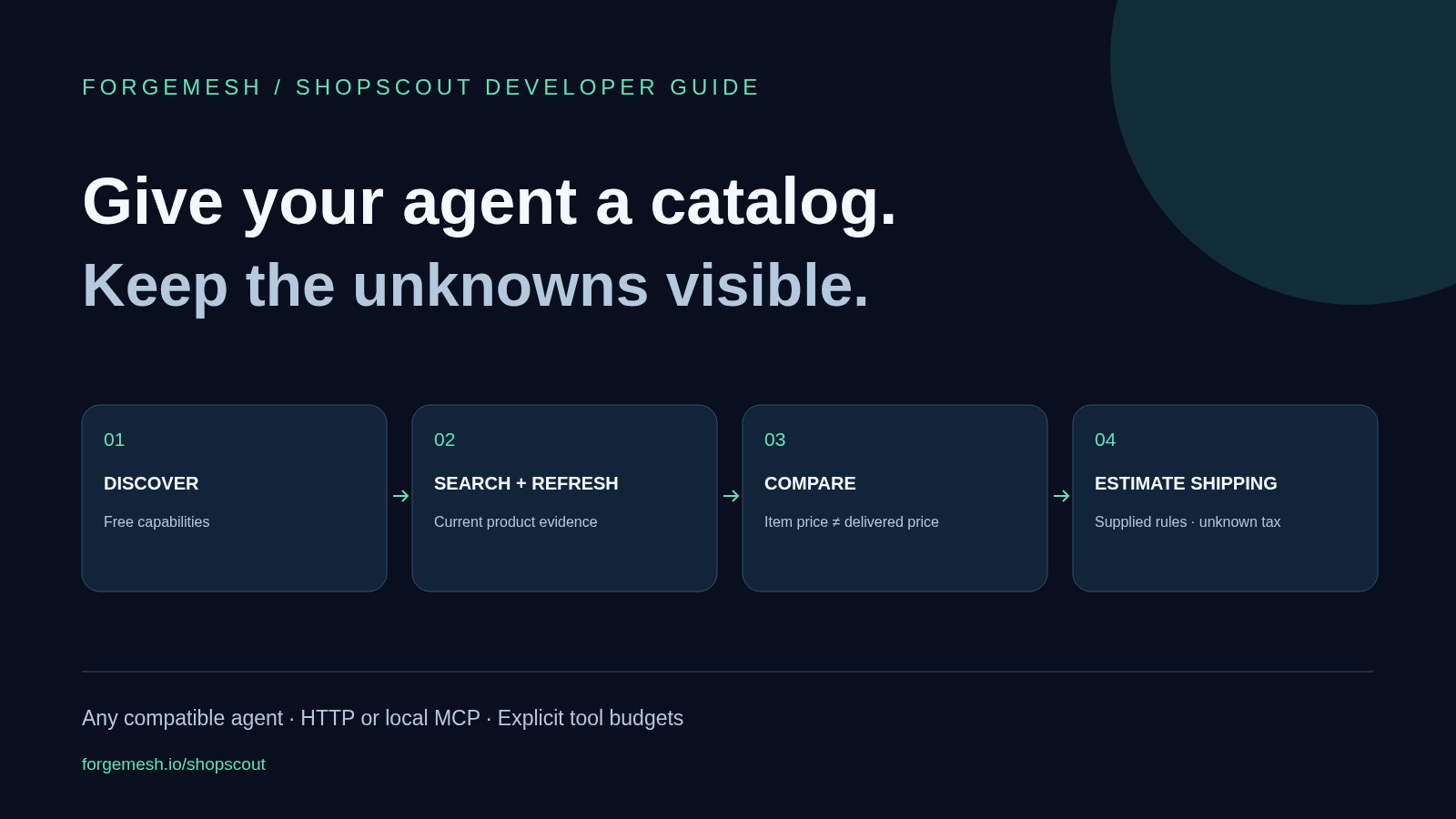 Build an AI Shopping Agent That Knows What a Deal Costs
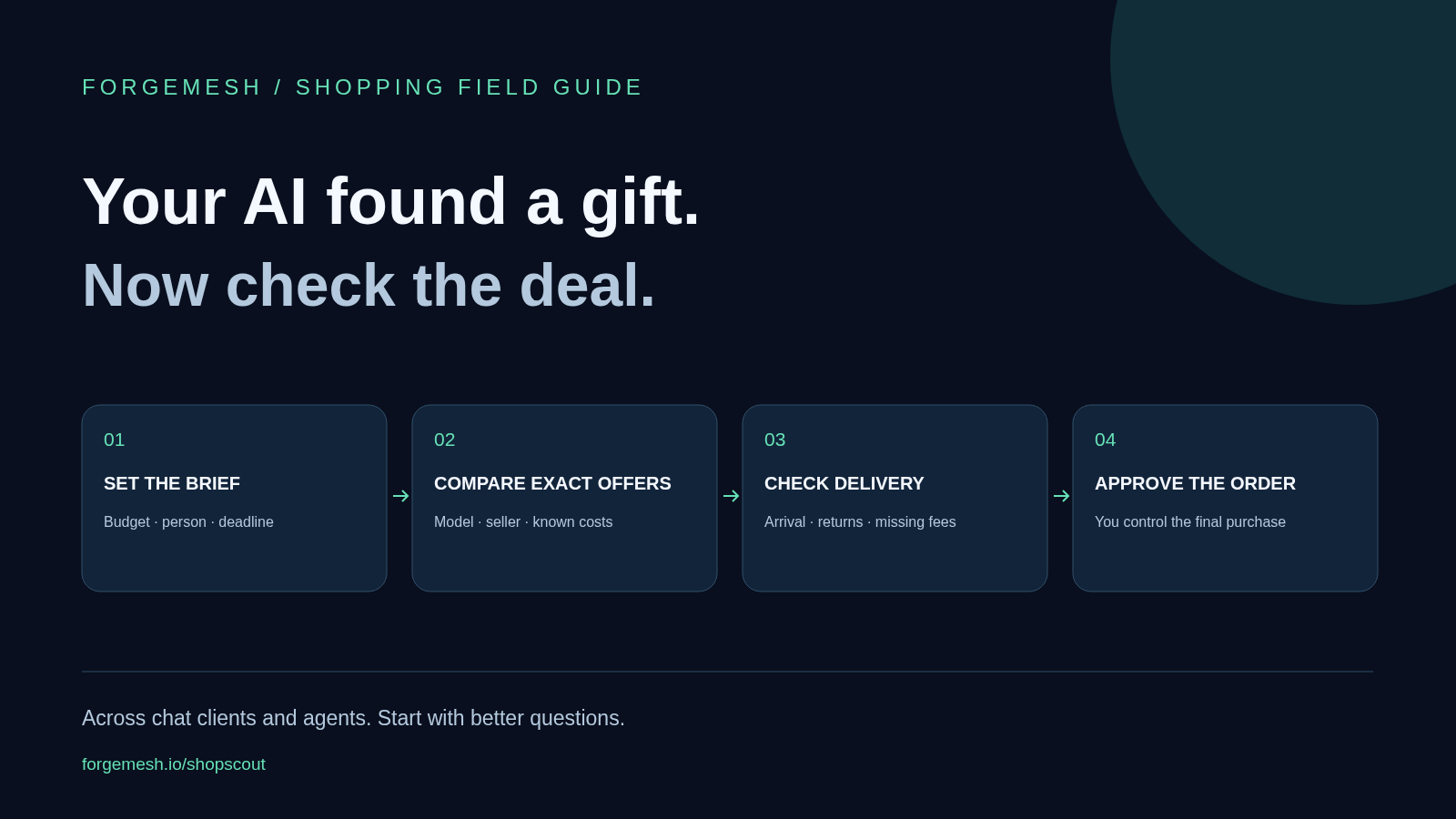 AI Shopping Assistants: A Better Way to Find Gifts
 Kronos Futures: Three Paid Calls That Turn a Price Range Into a Sized Perp Decision, a Funding Read, and a Survival Check
 The Banks Are in One Room in Miami Practicing a Rail With No Public Chain in the Middle. Here Is the Whole Week, Dated.
 Google's 60 Billion Listings Sit Behind an Invite-Only Pilot. Ours Sit Behind $0.01 and an HTTP Request.
 AI, Blockchain, Quantum: The Feedback Loop Just Closed