 Field notes ·
 Everything Moved in the Same Twelve Days. We Opened a Case File.
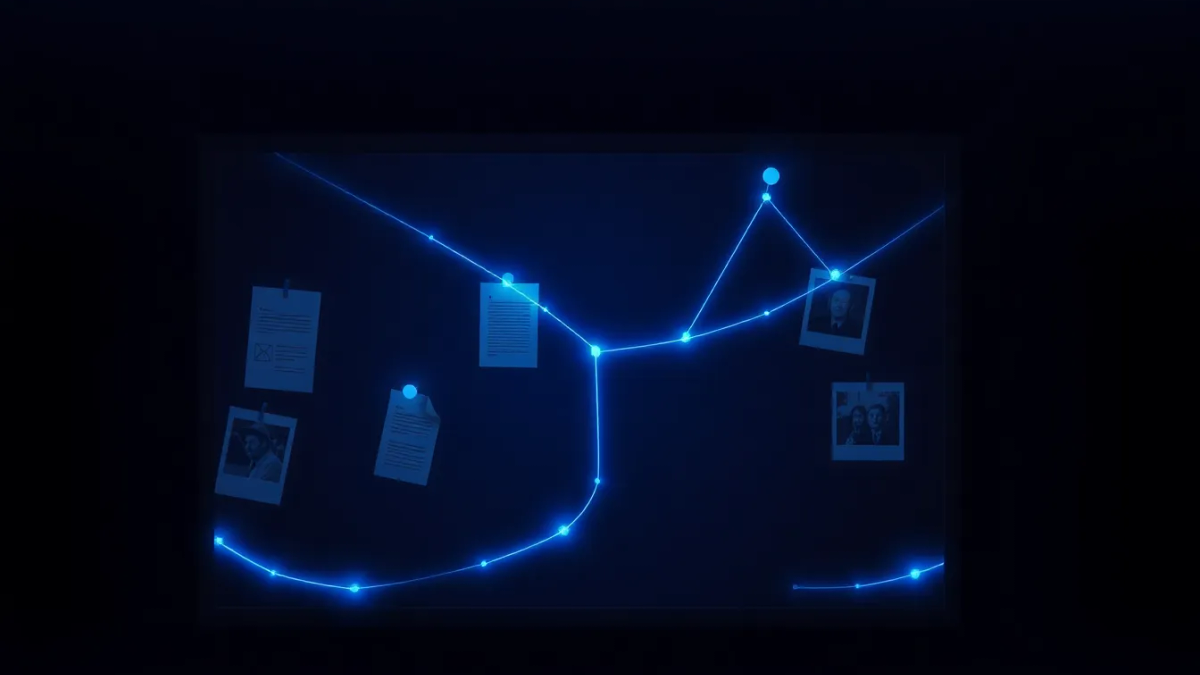
We keep timelines for a living — rail telemetry, grid filings, catalog censuses. Most weeks the entries don't talk to each other. Then came the twelve days between August 14 and August 26, when a federal banking regulator, the world's largest cloud, the White House, a corporate spend platform, a $4 billion stablecoin, an anonymous transaction flood, and the Texas grid operator all moved — separately, but in the same direction. We're not going to tell you what it means, because we don't know yet, and our whole brand is not saying "this is what it is" before it is what it is. What we can do is what any good case file does: lay the exhibits on the table, show you the strings, and write the hypothesis down in pencil.
The exhibits
Exhibit A — Aug 14. The OCC grants conditional approval to World Liberty Trust Company — the presidential family's stablecoin operation gets a path to a federal banking charter, pending $20M in capital and preopening conditions.
Exhibit B — Aug 16 onward. The x402 rail's transaction count detonates: 4–6× baseline for a week, then an all-time record 1.17M settled payments in one 15-hour window — at three cents a payment, with dollar volume flat. Industrial-scale machine buyers, stress-testing rails in production.
Exhibit C — Aug 18. AWS makes Bedrock AgentCore Payments generally available: production agents on Amazon's cloud can autonomously discover and pay x402 endpoints, with a curated Coinbase bazaar wired into the console. The same day, federal regulators unveil new crypto rules.
Exhibit D — Aug 19. Trump hosts the CEOs of Coinbase, Ripple, Kraken, Robinhood, and ICE at the White House, SEC Chair in the room, and publicly presses Congress to pass the CLARITY Act.
Exhibit E — Aug 20. Ramp switches on agent wallets for its 70,000+ business customers — corporate treasuries can now fund AI agents that spend USDC on Solana, with audit trails built in.
Exhibit F — Aug 25. World Liberty's $4.05B USD1 stablecoin goes native on the Canton Network — the institutional chain Wall Street banks use for tokenized settlement. Licensed-track money, planted on the banks' own rails.
Exhibit G — Aug 26. ERCOT confirms it will audit ~300 proposed data centers and pause new approvals — the physical layer of the machine economy gets told: prove you're real before you plug in.
And the scheduled exhibits. September 15: Cloudflare's default wall against mixed-use AI crawlers lands the same day as the CLARITY cloture vote. Sept 29–Oct 11: the KBW → TOKEN2049 conference corridor. October 9: Bitcoin's 1,064/364-day pattern projects its turning point. October 19: the GENIUS stablecoin docket closes — the deadline to be heard on who may issue machine money.
The strings
Pin the exhibits to a board and three strings appear. String one: every layer is suddenly demanding identity. Cloudflare demands crawlers identify themselves or pay. The x401 protocol — backed by Circle, OpenAI, Google, and Okta — demands agents prove who's behind them. ERCOT demands data centers prove ownership and financing. The GENIUS Act demands stablecoin issuers hold licenses. The anonymous, permissionless phase of the machine economy is being closed out simultaneously at the content layer, the identity layer, the money layer, and the power layer.
String two: the incumbents all built tollbooths first. AWS wired agent payments into the console before the market-structure vote. Stripe bought the routing layer (OpenRouter) and owns a settlement rail (MPP). Cloudflare turned its network position into a paid gate. Ramp turned corporate treasuries into agent-wallet funders. A politically connected issuer got its charter conditionally approved and planted $4B on the banks' chain — all before the rules freeze. Nobody waits to build a tollbooth unless they expect the road to become mandatory.
String three: every deadline lands in the same ten weeks. Cloture, the crawler wall, the conference corridor, the cycle window, the docket close — all before the election recess ends the legislative year. Whatever gets locked in by Thanksgiving is the structure the agent economy runs on into 2027.
The hypothesis — in pencil, clearly labeled
What follows is an educated guess. Not a claim, not a prediction, not advice — a hypothesis we're writing down before the events, so we can be graded honestly after them.
The permissioned machine economy locks in this fall. The racing behavior in the exhibits makes sense if the players believe the same thing: that by year-end, machine access to the web defaults to paid-and-identified, machine money narrows to licensed issuers, and the entities holding tollbooth positions when the cement dries get grandfathered into the new structure. Under that reading, the twelve days of August weren't coincidence — they were the visible part of a land rush.
If the hypothesis is right, here's what we'd expect to see: at least one major agent-commerce announcement in the KBW→TOKEN2049 corridor pairing a tech giant with a licensed stablecoin issuer; "verified agent" requirements spreading from Cloudflare's wall to payment rails themselves (x401-style identity attached to x402-style payments); GENIUS docket filings from the biggest issuers rather than objections; and the transaction floods continuing — because industrial buyers keep stress-testing rails they intend to depend on.
And here's what would prove us wrong, because a hypothesis without falsifiers is just a vibe: the CLARITY cloture fails and nothing else wobbles. The crawler wall quietly grandfathers everyone and changes nothing. The docket closes with objections instead of applications. The rails go quiet after September. Or the ERCOT audit finds the 474 GW queue mostly real — meaning the buildout doesn't need a shakeout and the verification wave was bureaucracy, not restructuring. Any two of those, and we'll write the retraction ourselves.
Days — Aug 14 to Aug 26 — in which the charter, the cloud, the White House, the wallets, the stablecoin, the flood, and the grid all moved.
Layers simultaneously demanding identity: content (Cloudflare), agents (x401), money (GENIUS), markets (CLARITY), power (ERCOT).
Weeks until the election recess freezes whatever structure exists by then.
The 1971 mirror
One more string, offered gently. The last time the plumbing of money was rebuilt, it happened on a single day — August 15, 1971, when Nixon closed the gold window and every major currency became a pure government liability. That shift changed what money is. If the hypothesis above holds, this one changes who money is for: the first monetary buildout in history designed primarily for participants that aren't people. In 1971 the change was announced on a Sunday night after the decision was made. This time, unusually, the dates are published in advance — which is why we put them on a calendar you can subscribe to. We'll log what actually happens on each one, grade this hypothesis in public, and say "we were wrong" in a headline if we were. That's the deal.
Watch the board with us
Every exhibit above has a date, and every date is on our live calendar with sources and countdown clocks — downloadable straight into yours at forgemesh.io/calendar. If the permissioned machine economy is really arriving, the sellers who win are the ones agents can already find, trust, and pay.
Related reading: Every clock in the machine economy strikes this fall — the date math and x402 just set a transaction record. The money didn't move..
- case file
- agent economy
- policy
- field report
 Send a Bot to Paywall Your Store. Four Calls, Keep 85%.
 546 Bots Visited Our Fleet This Week. Eight of Them Paid.
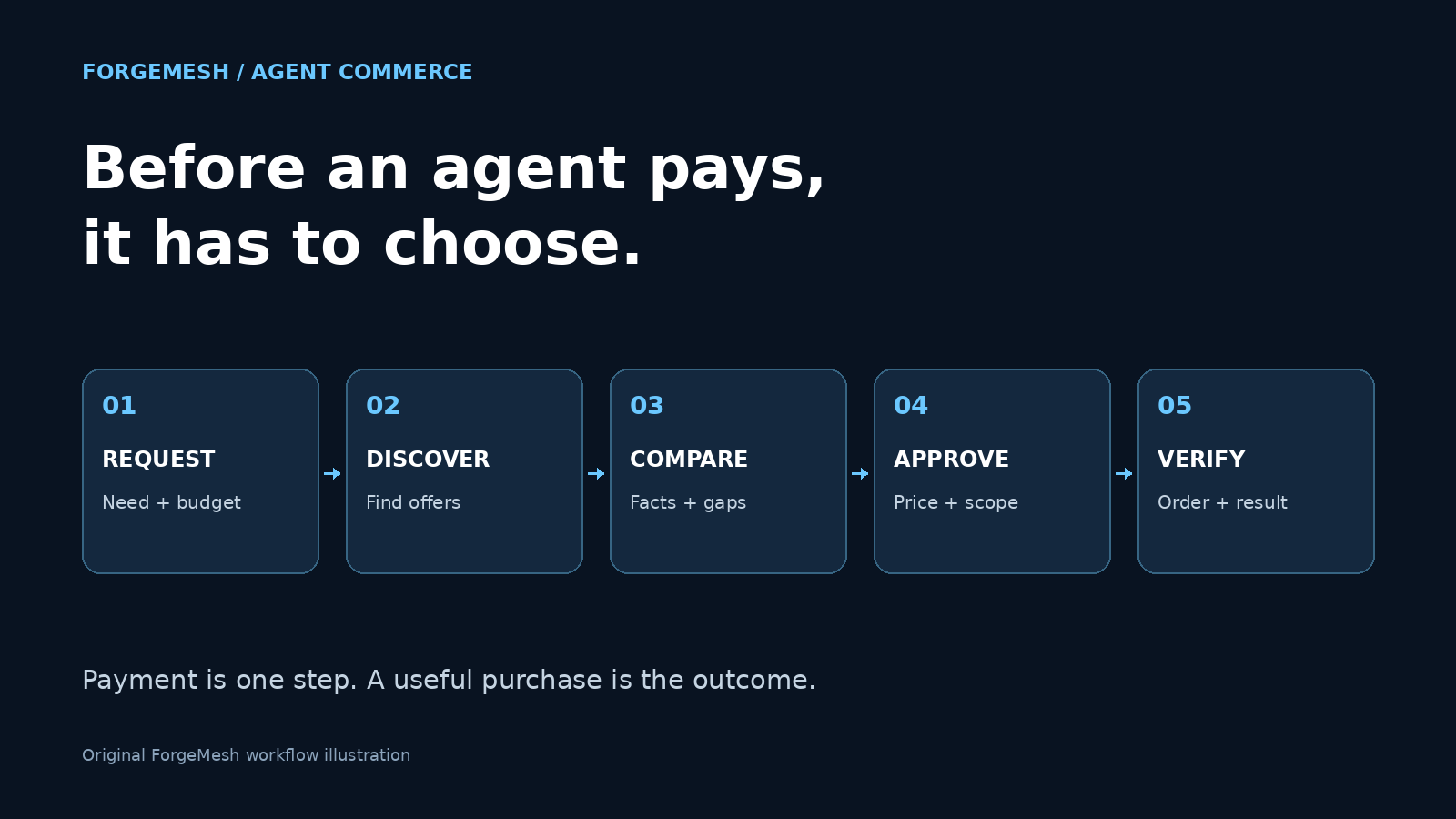 The Machine-Native Economy Starts Before an Agent Pays
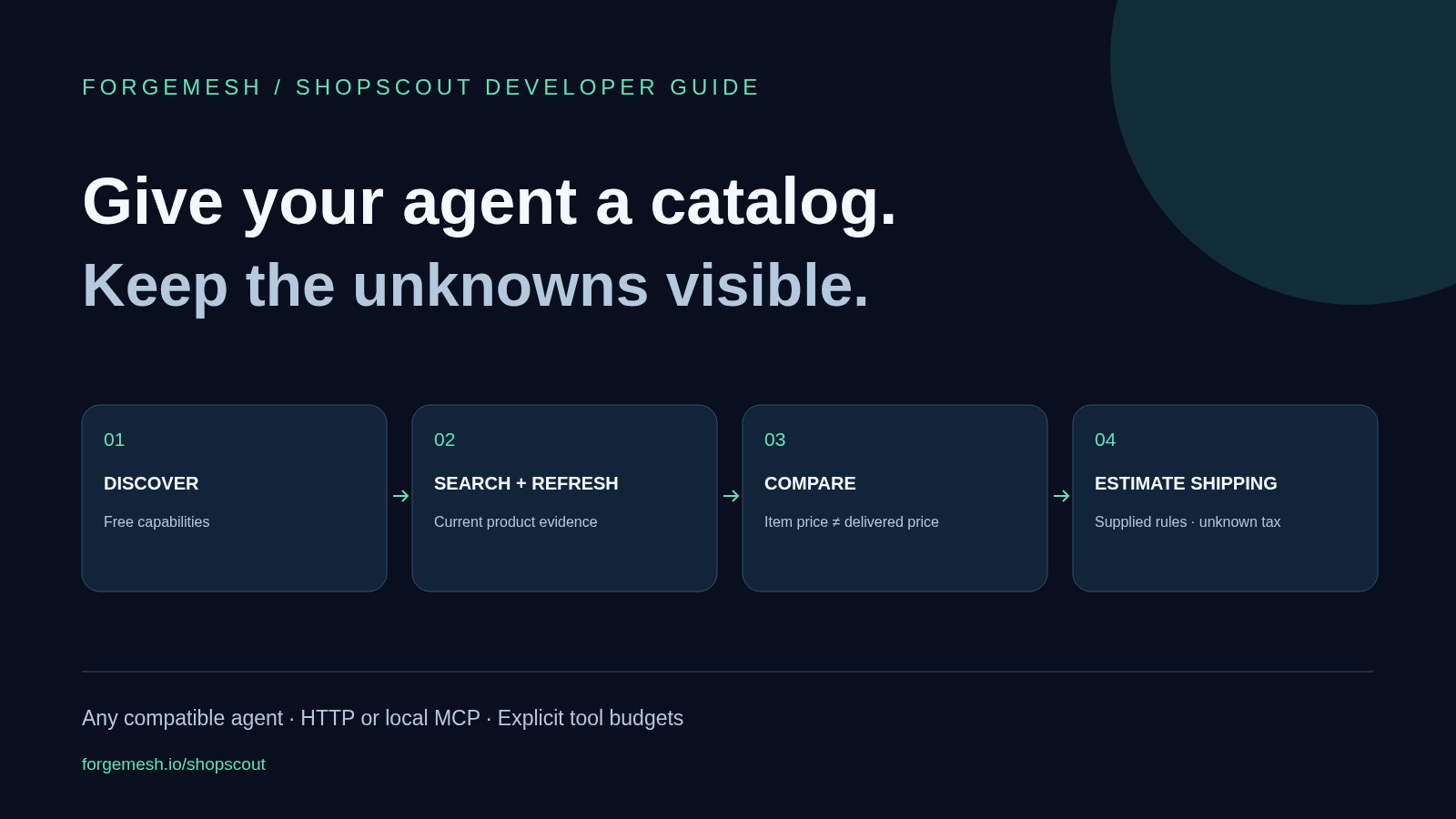 Build an AI Shopping Agent That Knows What a Deal Costs
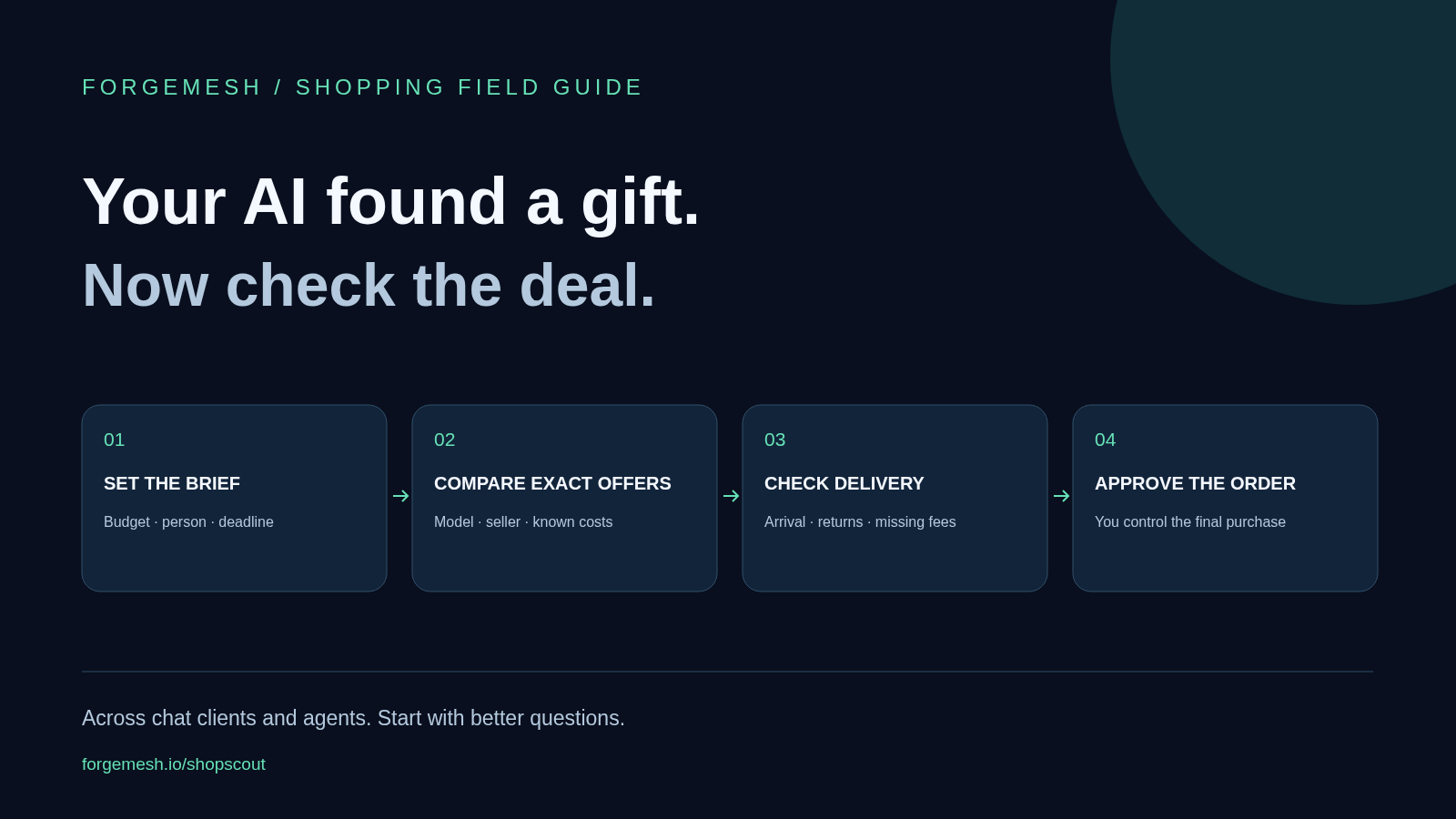 AI Shopping Assistants: A Better Way to Find Gifts
 Kronos Futures: Three Paid Calls That Turn a Price Range Into a Sized Perp Decision, a Funding Read, and a Survival Check